
Fossils in Our Galaxy
Prof. Kim Venn
University of Victoria
Register For The Webinar
Or watch on YouTube

Kim A. Venn is a professor of physics and astronomy at the University of Victoria, and Director of the UVic Astronomy Research Centre. She is a specialist in observational stellar spectroscopy, and the chemo-dynamical analysis of stars in the Galaxy and its nearby dwarf satellites.
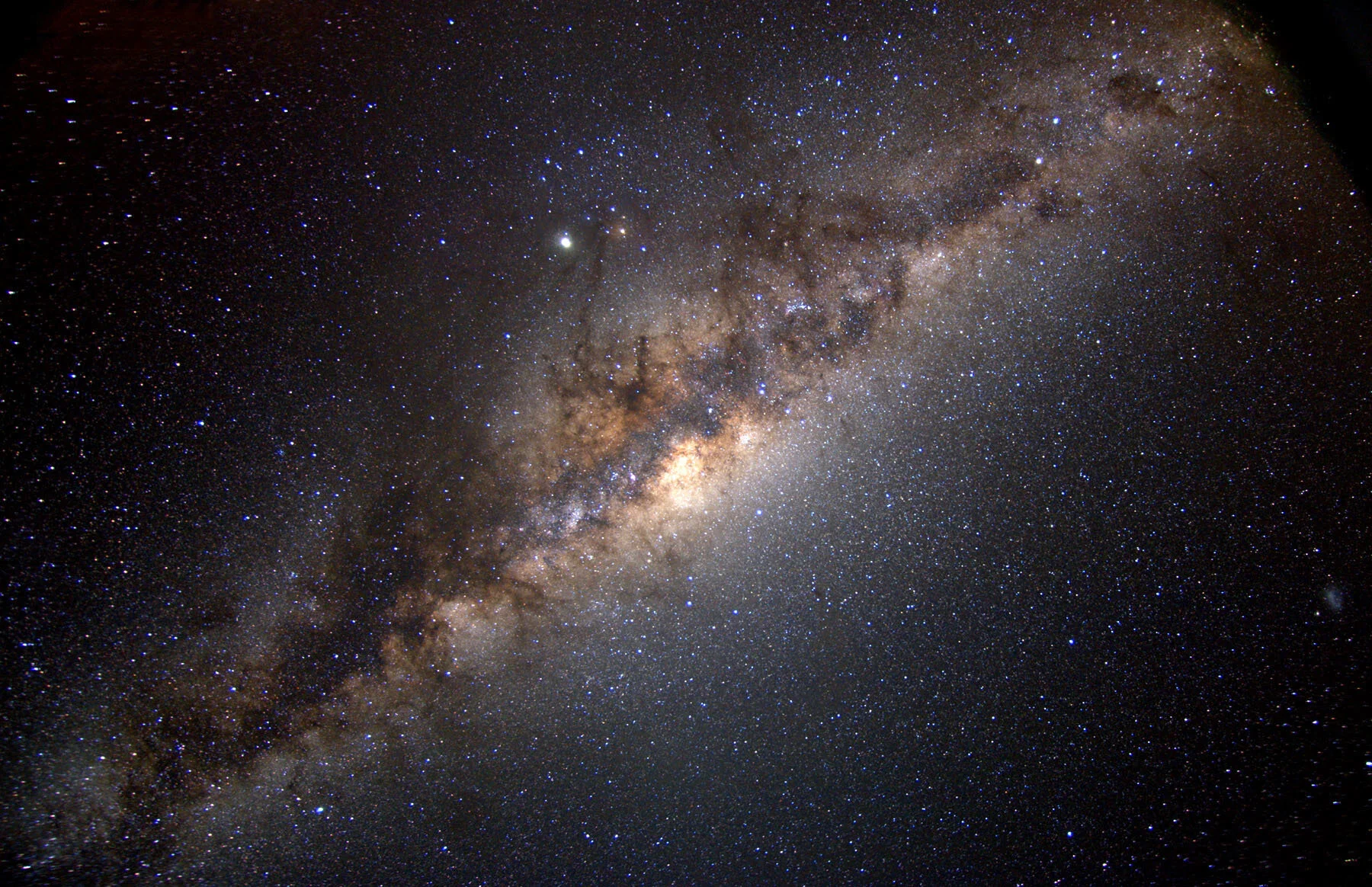
The Milky Way. Source: NASA
Stars contain a fossil record of the chemistry of the Universe at the time and place where they were born. Stars formed early in the universe contain very low amounts of elements heavier than Helium, and astronomers call these stars ‘metal-poor’. They are the fossils of ancient star formation in the galaxy.
By studying the most metal-poor of these stars, we can read that fossil record to learn about the origin of the elements and formation of the Galaxy. In this talk, I will discuss the recent results on the metal-poor galaxy, including newly discovered streams in the halo, very metal-poor stars found in the Galactic Centre, and metal-poor stars in the Galactic disk that orbit in the opposite direction.
Register in advance for the International Astronomy Day Celebration
Register For The Webinar
Or watch on YouTube
After registering, you will receive a confirmation email containing information about joining the Star Party.
Also on the Program:
DAO Virtual Tour
Live Solar Viewing from the DAO
University of Victoria Telescope Tour
Ask an Astronomer (or two) with Jason Beaman and Nathan Hellner-Mestelman
Astrophotography Gallery with Marjie Welchframe and friends featuring music from Vox Humana
Planetaruim Show from the CU
Live Streaming from the Plaskett Telescope, the CU and other locations
featuring Dan Posey, David Lee and the RASC Electronic Assisted Astronomy Group