
Do Massive Black Holes Come in Small Packages?
Dr. Matt Taylor
Abstract
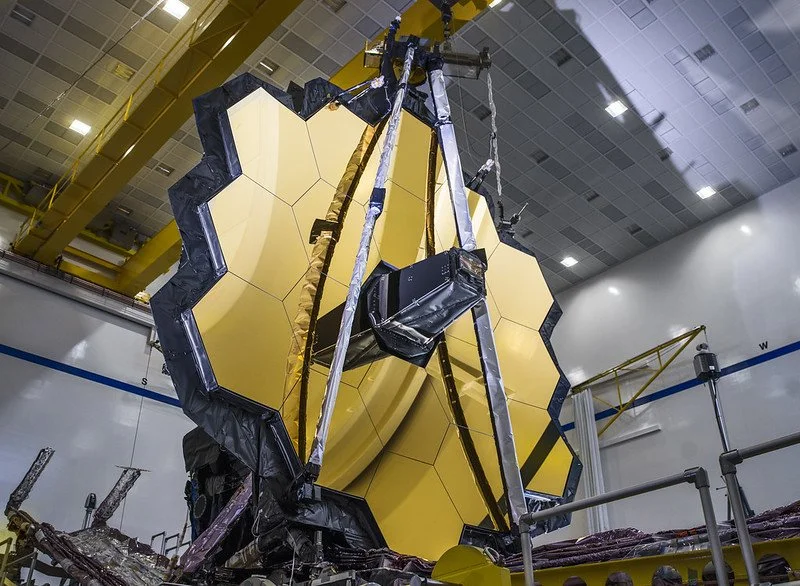
Black holes (BHs) are the densest accumulations of matter known in the Universe, with gravity so extreme that once within a BH’s sphere of gravitational influence nothing can escape—not even light. BHs have been shown to be ubiquitous throughout the universe, and range from low-mass BHs (just a few solar masses) to so-called super-massive BHs (SMBHs) that reside in the cores of most—if not all—giant galaxies. SMBHs are of particular interest, since over cosmological time they have accreted enough matter to reach masses up to several million times the mass of the Sun. Despite the known BHs at either end of the mass distribution, the existence of so-called intermediate-mass BHs (IMBHs) is still poorly constrained. Since IMBHs in dwarf galaxies are likely to be the counterparts of the “seed” BHs from which SMBHs grew, determining the frequency of IMBHs in low-mass galaxies is crucial for understanding BH and galaxy formation. If they are common, IMBHs likely inhabit the cores of at least some low-mass stellar systems like dwarf galaxies, nuclear star clusters (NSCs), and ultra-compact dwarfs (UCDs). With the impending launch of the James Webb Space Telescope, a systematic census of BHs in such low-mass stellar systems is finally possible, as similar studies are prohibitively expensive using current ground or space-based facilities. Here I will give an overview of a program aiming to do just that, targeting 18 compact stellar systems in the nearby Virgo galaxy cluster with JWST. These unprecedented new observations will reveal the dynamical fingerprints of any BHs, providing critical new information on the origin of SMBHs through cosmic time.


Bio

Hailing from the Comox Valley, Dr. Matt Taylor is a currently a research astronomer at HAA in Victoria, who will be taking up a faculty position at University of Calgary in 2022. Matt finished his undergraduate studies at the University of Victoria in 2011 before earning his PhD in 2016 from Pontificia Universidad Católica de Chile in Santiago, Chile. Since then he has held research positions as a Gemini Science Fellow at Gemini Observatory in Hilo, Hawai’i before moving back to Victoria as a Postdoctoral Fellow for the National Research Council of Canada. Dr. Taylor’s research is centred on how low-mass stellar systems like dwarf galaxies, globular clusters, and ultra-compact dwarfs can be used to constrain the formation and evolution of their giant galaxy hosts. Most recently, Matt is the principal investigator for a James Webb Space Telescope program designed to probe the motions of stars deep within their hosts and thus search for “smoking gun” evidence of any massive black holes lurking in their cores.
JWST, Ready for Launch!
Dr. Chris Willott
Abstract
I will describe the capabilities of the James Webb Space Telescope, the plan for commissioning the telescope after its launch and some of the science I am planning for the first year of science operations.
Bio
Dr Chris Willott is a Senior Research Officer at the National Research Council’s Dominion Astrophysical Observatory in Victoria. Dr Willott started working on the James Webb Space Telescope (JWST) in 2006 and is presently the Canadian JWST Project Scientist and Principal Investigator of two JWST Cycle 1 observing programs.