
The early Years
The early Years
-
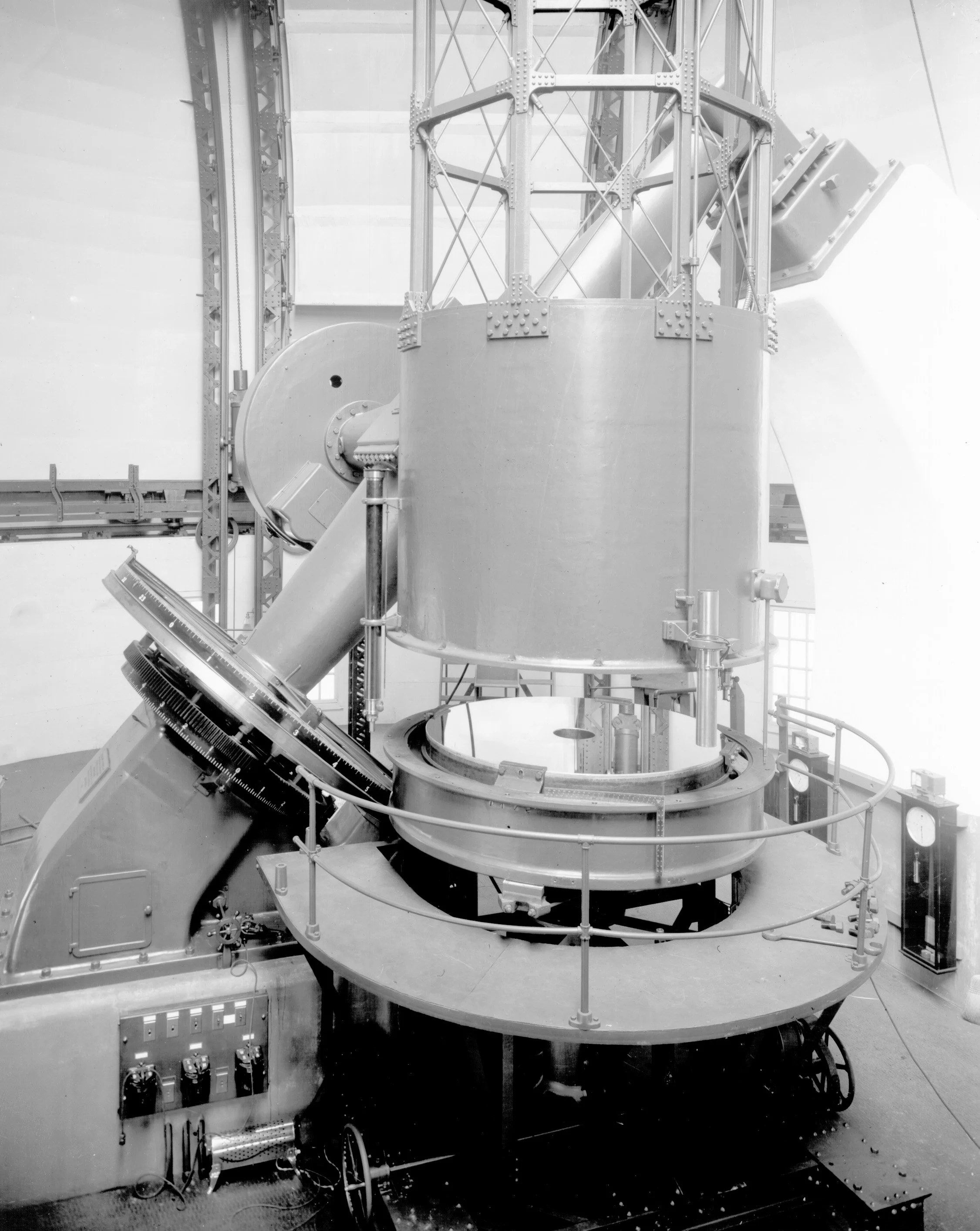
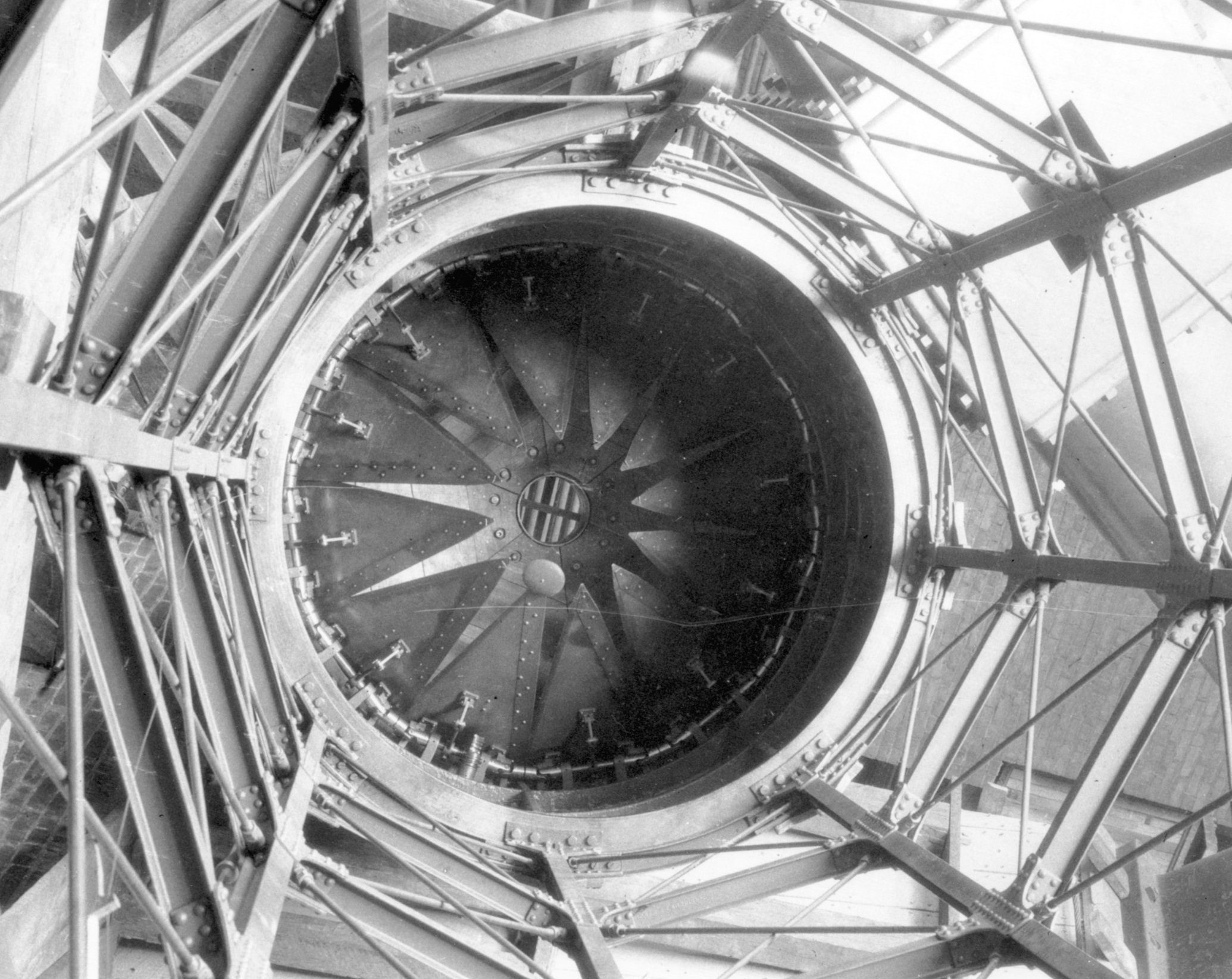
The DAO opened in May 1918. The world’s largest operational telescope was the preserve of astronomers J.S. Plaskett and R.K. Young, and night assistant Thomas Tennant Hutchison. who immediately began observations. In coordination with the Mt. Wilson Observatory in California, they began an ambitious 800 star, multi-year observing program to measure radial velocities. They were joined by William Harper in 1919. Using the efficient new telescope they were able to expose 1800 photographic plates and measure 1000 of them by the time Harper arrived. Plaskett's son, Harry, returned from the Great War in 1919, joining the observatory in August. He immediately participated in the observing program, and over the following years made several exciting contributions to stellar spectroscopy.
-
In late 1921 Plaskett made repeat observations of one of the stars on the observatory’s observing list. He noticed that the star was a binary and after securing more data, he realized he had discovered the most massive pair of stars known at the time. This discovery of what became known as “Plaskett's Star” marked a rare moment where public interest nearly matched the DAO astronomers' fascination with binary stars. The flurry of publications and worldwide press coverage made John Stanley Plaskett a well-known name. His discovery also raised the profile of the Victoria telescope and the City of Victoria.
-
During the early 1920's, the daily Colonist ran bi-weekly 'Astronomy Talks' columns to inform Victorians on the progress of science at the observatory. This practice, as well public talks on astronomy, continued throughout the 1930's. Also in the 1920’s W.E. Harper embraced the latest technology of radio to conduct regular broadcasts over the CFCT on current understandings in astronomy.
The telescope was widely visited throughout the 1920's, hosting tourists, visiting scientists, and contributing to incredible astrophysical discoveries. Despite being eclipsed in size by the Hooker 100" telescope on Mt. Wilson, the DAO remained the largest telescope an 'ordinary visitor' could look through. Due to extensive engagement efforts, public interest in the telescope steadily increased throughout the 1920's. In 1925, Plaskett reported that 25,000 visitors had travelled to the DAO each year since it was built. By 1929, this figure increased to nearly 40,000. -
In 1922, astronomer R.K. Young represented the DAO on the Canadian eclipse expedition in Western Australia. The Canadian team captured several clear images, and successfully measured the gravitational bending of starlight passing the sun, thus confirming the expectations of Einstein's Theory of General Relativity. The story was told in the recent documentary Bending Light, available for streaming on Superchannel until November 2025
With the initial radial velocity program proceeding smoothly, the staff at DAO began to investigate one of the biggest puzzles of astrophysics: the structures of the Milky Way galaxy. Plaskett led this work which would result in the the greatest scientific achievement of Plaskett and the DAO.